


What is the flange production process?
Release time:
Oct 14,2021
What is the flange production process?
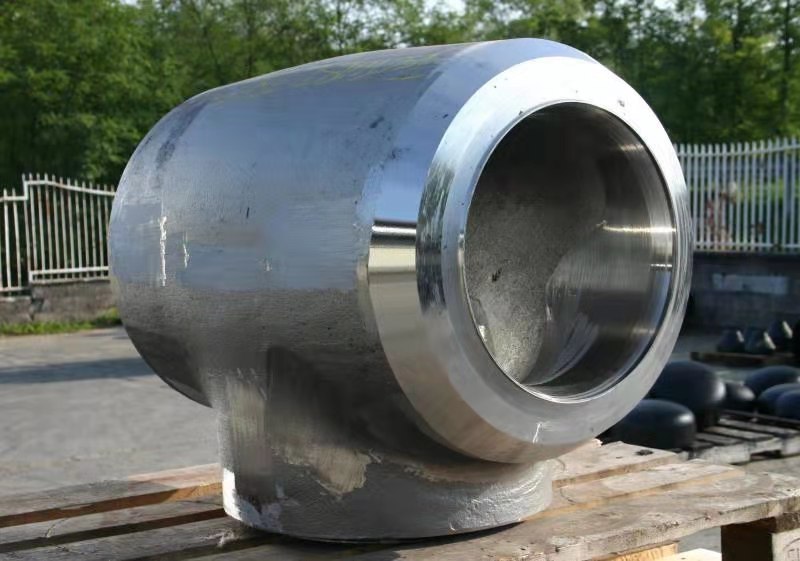
Flange, also known as flange or flange flange, is the connection between the shaft or pipe at the end of the pipe; the inlet and outlet of the equipment also have flanges connecting the two equipment. Forging is a common square method for flanges. After forging flanges, turning, drilling and other processes are required to complete flange processing.
What is the flange production process?
At present, the commonly used production process of flange includes the following steps: s1, rough turning, I .e. turning the inner circle end face of the forging based on the outer circle, and then turning the inner circle based on the outer circle; S2, drilling, that is, using a drilling rig to drill workpieces; S3, fine turning, turning the inner circle end face of the forging with the outer circle as the reference, turning the inner circle with the outer circle as the reference; S4, cleaning, cleaning, cleaning workpiece with the ultrasonic cleaning machine; S5, that is, the above-mentioned existing technical scheme on the surface of the workpiece with anti-rust oil has the following defects: in the turning process, the outer circle of the workpiece will be clamped when turning the inner circle, and the outer circle of the workpiece will be clamped when turning the inner circle, so in the turning process, the workpiece needs to be clamped and centered again. The centering process is tedious and time-consuming, resulting in reduced processing efficiency.
Improvement of flange processing technology
In order to overcome the disadvantages of the prior art, the skilled person provides a flange processing technology to improve the processing process and improve the efficiency. The method is implemented through the following technical solutions. The method mainly includes the following steps:
S1, rough turning, I .e. turning workpiece; The outer circle, inner circle and two end faces of S2 are drilled, I .e. the workpiece is drilled with a drilling machine;
S3, fine turning, that is, the open outer circle, inner circle and two end faces for turning processing;
S4 cleaning, that is, cleaning the workpiece with gasoline; S5, workpiece;
Step s1 and/or s3 of oiling and kerosene coating on the surface. The auxiliary clamping device is used to assist in clamping the workpiece. The auxiliary clamping device includes a mounting frame slidably connected with the lathe frame, and the mounting frame is coaxially arranged. The rotating shaft of the mounting ring is vertically arranged, at least three sliding blocks are slidably connected with the circumferential direction of the mounting ring, and the extension line of the sliding direction of the sliding block passes through the mounting ring, the end of the slider close to the middle of the mounting ring is parallel to the mounting ring with the intermediate shaft, the collision roller of the intermediate shaft is rotatably connected, and the mounting ring is provided with a driving structure for driving the slider to slide.
It should be added that the workpiece should be installed on the lathe fixture during the manufacturing process. When one end of the workpiece needs to be processed and the other end needs to be processed, the workpiece should be clamped by the auxiliary clamping device, and then the lathe fixture should be loosened and the mounting ring should be rotated 180 degrees. The other end face of the workpiece faces the tool, and then, since the mounting ring is arranged coaxially with the lathe spindle, the workpiece is clamped by the lathe clamp, so that when the drive structure drives the slider through the collision roller to clamp the workpiece, the workpiece is arranged coaxially with the lathe spindle.
To sum up, the new flange has the following beneficial technical effects: First, because the mounting ring is coaxially arranged with the lathe spindle, the lathe clamp is used to clamp the workpiece. When the driving structure drives the slider to clamp the workpiece with the impact roller, the workpiece and the lathe spindle are coaxially arranged, which facilitates the turning, clamping and centering of the workpiece and effectively improves the processing efficiency of the method. The workpiece is tightly pressed against the roller. After clamping, the workpiece can be rotated to adjust and detect the workpiece. Third, when finishing turning, first use the inner circle as the inner circle of the reference wheel forging, then use the outer circle as the two end faces and the inner circle of the reference wheel, process the reference surface with the inner circle, and then process the two end faces and the inner circle of the blue, method, so that the rest of the workpiece is processed with the reference surface to provide flange accuracy.


Contact Information
Can't find the product you are looking for? Contact us!
To inquire about our products, please contact us through the right way, we will provide you with detailed information.
Address: Zhenggang Park, Yanshan Economic Development Zone, Hebei