

What are the characteristics of prefabricated buried thermal insulation plastic pipe? What are the precautions for use?
Release time:
Jul 06,2022
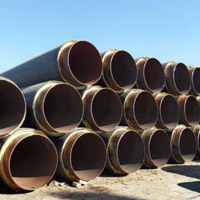
What are the characteristics of prefabricated direct buried thermal insulation plastic pipes for pipeline factories? Let's take a look.

1. Corrosion resistance. The secondary network is directly connected to the user, and if the maintenance is not in place during the non-heating period, the corrosion rate of the steel pipe will be accelerated. Plastic pipe is a corrosion-resistant material, which can avoid the risk of water quality deterioration caused by pipeline leakage and pipeline corrosion.
2. Thermal insulation performance. The thermal conductivity of the plastic pipe is lower than that of the steel pipe, and the heat loss of the pipe is less than that of the steel pipe under the same insulation and laying conditions.
3. Pipeline structure. The pipe adopts plastic pipe, and the thermal insulation layer adopts rigid foam plastic. It can also form a "trinity" transmission structure of directly buried insulation pipes.
4. Pipeline laying. The flexibility of plastic pipe is better than steel pipe. Lying in the yard is easy to bend. Bends and other accessories can be replaced. Plastic insulation pipes can be processed into straight pipes or rolled into any length, reducing the number of field interfaces.
5. Field interface. The automatic welding machine can be used to weld plastic pipes, which reduces the influence of human factors and ensures the stability of welding quality. Flanges can be used to connect plastic pipes, steel pipes and valves.
6. Hydraulic characteristics. The inner surface of the plastic tube is smooth. Compared with steel pipes, plastic pipes with the same inner diameter have less hydraulic loss and reduce the power consumption of the circulating pump.
7. Working temperature. When plastic processing pipes are used, the temperature of the conveying medium must not exceed 90c.
8. Working pressure. In general, the pressure of plastic pipe is less than 1.0 MPa.
9. Wall thickness. Plastic pipes will creep and relax at high temperatures, and their mechanical strength will decrease over time. This drop is related to the operating temperature and time. When designing, it is necessary to calculate the design strength of the pipeline and determine the thickness grade of the pipeline according to the temperature curve and service life of the system.
10. Thermal expansion stress. Although the plastic pipe has a large expansion coefficient, its elastic modulus is small. When the plastic pipe is directly buried, the thermal expansion stress is less than that of the steel pipe, and the anchoring section can be formed.
11. Thermal elongation of pipes. The thermal expansion force of buried plastic pipes is small and can only be balanced by small soil friction. Therefore, the active section of the plastic pipe is short and the thermal elongation is small.
12. Piping layout. The plastic pipe has good elasticity, short movable section, flexible bifurcation and turning arrangement, which is convenient for direct laying without compensation. There is generally no need to install compensators and fixed piers.
Among them, the precautions for the use of prefabricated direct buried insulation pipes for pipeline factories are as follows:
1. Before entering the site for construction, it is necessary to ensure the quality of the project and carefully check the site. Prefabricated directly buried insulation pipes also need strict inspection to ensure that there are no quality problems before construction.
2. During construction in various wells, in order to more effectively ensure the quality of the project and the service life of the pipeline, the bracket can be fixed in the well, and the built-in bracket should use anti-corrosion and waterproof materials as much as possible to effectively ensure that it will not be affected under flood conditions.
3. Since most of the prefabricated directly buried insulation pipes are buried underground, after the project acceptance, if there is a problem with the construction details, it is likely to affect the subsequent use, so professionals are required to conduct on-site inspection during construction.
4. During pipeline construction, it is necessary to determine whether the joints are welded, and whether the unit weight of the prefabricated directly buried insulation pipe and various standards are qualified.
5. During the construction process, the construction needs to be carried out in accordance with the requirements of relevant standards, and no detailed steps must be omitted, otherwise it may cause serious consequences.


Contact Information
Can't find the product you are looking for? Contact us!
To inquire about our products, please contact us through the right way, we will provide you with detailed information.
Address: Zhenggang Park, Yanshan Economic Development Zone, Hebei